
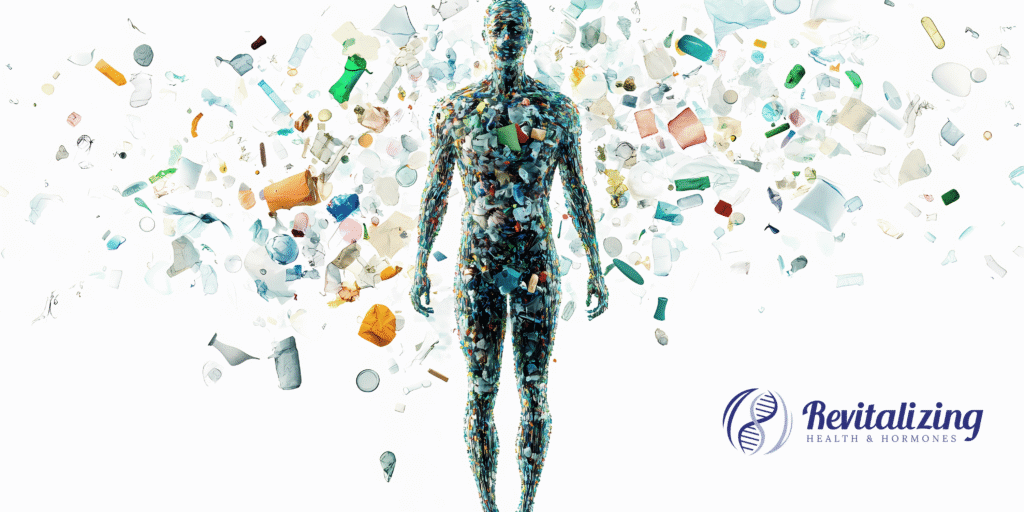
Understanding the Hidden Environmental Exposure That May Be Impacting More Than You Think
Every day, you’re exposed to tiny plastic particles that are nearly impossible to see.
They’re in the water you drink, the food you eat, the clothes you wear, the air you breathe, and even the dust that settles in your home.
For years, scientists questioned whether these microscopic particles actually had any meaningful impact on human health. Today, that question is becoming increasingly difficult to ignore.
A recently published study in the European Heart Journal has added another important piece to the puzzle, finding that 84% of patients experiencing a severe heart attack had detectable micro- and nanoplastics in the blood supplying their heart.
While the study does not prove that microplastics cause heart attacks, it contributes to a growing body of research suggesting these environmental contaminants may influence cardiovascular health—and potentially much more.
At Revitalizing Health & Hormones, we believe understanding your health means looking beyond symptoms and considering every factor that may be influencing your body, including the environment around you.
What Are Microplastics?
Microplastics are plastic particles smaller than five millimeters in size. Even smaller particles—called nanoplastics—are invisible to the naked eye and may be small enough to enter the bloodstream and various tissues throughout the body.
Unfortunately, avoiding them completely has become nearly impossible.
Today, common sources include:
- Plastic water bottles
- Food storage containers
- Plastic food packaging
- Take-out containers
- Disposable coffee cup lids
- Synthetic clothing
- Household dust
- Personal care products
- Air pollution
Researchers have now identified microplastics in numerous human tissues, including the:
- Blood
- Brain
- Liver
- Placenta
- Lungs
- Arteries
The fact that these particles can travel throughout the body has prompted scientists to ask an important question:
Could they be contributing to chronic disease?
A Closer Look at the New Heart Study
Researchers recently evaluated 61 patients undergoing coronary angiography, measuring microplastic levels directly from the arteries supplying blood to the heart.
The findings were eye-opening.
Patients experiencing an acute heart attack:
84% had detectable microplastics or nanoplastics.
Patients with stable coronary artery disease:
40% had detectable levels.
Patients with normal coronary arteries:
32% had detectable levels.
Researchers also discovered that heart attack patients didn’t simply have more positive tests—they often had higher concentrations and a greater variety of plastic particles than the other groups.
The most commonly detected plastic was polyethylene, one of the world’s most widely used plastics, commonly found in:
- Shopping bags
- Plastic bottles
- Food packaging
- Plastic films
The study also found two notable trends:
- Smokers were significantly more likely to have detectable microplastics.
- Long-term exposure to air pollution also increased the likelihood of finding these particles.
While these findings are significant, they raise an equally important question…
Does This Mean Microplastics Cause Heart Disease?
The short answer is:
No—not based on this study alone.
This research was observational, meaning it can identify associations but cannot prove cause and effect.
Researchers cannot yet determine whether microplastics:
- Directly contribute to heart disease
- Accelerate existing cardiovascular disease
- Increase chronic inflammation
- Damage blood vessels
- Promote oxidative stress
- Or simply reflect higher exposure to other environmental risks like smoking or pollution
Much larger studies are needed before scientists can fully understand the relationship.
Still, the evidence continues to point toward one important idea:
Our environment matters.
Why Functional & Integrative Medicine Pays Attention to Environmental Health
One of the biggest misconceptions in healthcare is that illness is usually caused by one single thing.
In reality, health is influenced by the accumulation of many small factors over time.
At Revitalizing Health & Hormones, we often refer to this as the body’s total health burden.
Rather than asking,
“What’s causing my symptoms?”
we ask,
“What combination of factors is placing stress on the body?”
Those factors often include:
- Nutrition
- Sleep quality
- Exercise
- Hormone balance
- Chronic inflammation
- Gut health
- Stress
- Blood sugar regulation
- Environmental toxins
- Nutrient deficiencies
Microplastics may represent another piece of this larger puzzle.
While they may not be the sole cause of disease, reducing unnecessary exposure and supporting the body’s natural resilience aligns with the preventive, whole-person approach we take every day.
Could Microplastics Be Affecting More Than Your Heart?
Researchers are beginning to explore whether microplastics may influence systems beyond cardiovascular health.
Although more studies are needed, scientists are investigating possible links to:
- Chronic inflammation
- Fatigue
- Hormonal disruption
- Immune function
- Gut health
- Metabolic dysfunction
- Oxidative stress
These are many of the same systems we evaluate when patients come to us feeling tired, struggling with weight, experiencing brain fog, or simply feeling “off.”
While microplastics are unlikely to be the only explanation, they remind us that our health is shaped by far more than calories, exercise, or age alone.
Practical Ways to Reduce Your Exposure
The good news?
You don’t need to eliminate plastic entirely to make meaningful improvements.
Small, consistent changes can help reduce your overall exposure.
Choose Glass or Stainless Steel
Replace plastic water bottles and food storage containers whenever practical.
Avoid Heating Food in Plastic
Heat can increase the release of plastic particles into food.
Drink Filtered Water
A quality filtration system may reduce microplastic exposure through drinking water.
Eat More Whole Foods
Minimally processed foods typically involve less plastic packaging than heavily processed convenience foods.
Reduce Single-Use Plastics
Reusable containers, shopping bags, and drinkware can reduce unnecessary exposure over time.
Improve Indoor Air Quality
Vacuum regularly using a HEPA filter, dust often, and maintain good ventilation to reduce airborne plastic particles.
Don’t Smoke
Smoking was one of the strongest predictors of detectable microplastics in the recent heart study and remains one of the most significant modifiable risk factors for cardiovascular disease.
Supporting Your Heart Means Supporting Your Whole Body
Reducing environmental exposures is only one piece of long-term cardiovascular wellness.
At Revitalizing Health & Hormones, we take a comprehensive approach by helping patients optimize:
- Metabolic health
- Blood sugar regulation
- Hormone balance
- Chronic inflammation
- Nutritional deficiencies
- Body composition
- Sleep quality
- Stress management
- Exercise and recovery
- Gut health
These foundational areas often have a profound impact on long-term health and quality of life.
Rather than chasing symptoms, our goal is to understand why those symptoms are happening in the first place.
The Bottom Line
The science surrounding microplastics is still evolving, but one message is becoming increasingly clear:
Our environment influences our health.
While we cannot yet say that microplastics cause heart attacks or cardiovascular disease, this newest research highlights another reason to pay attention to the everyday exposures that may affect our bodies over time.
The encouraging news is that many of these exposures can be reduced through thoughtful lifestyle choices—and when combined with optimized nutrition, healthy movement, restorative sleep, balanced hormones, and personalized medical care, they become part of a proactive approach to lifelong wellness.
At Revitalizing Health & Hormones, we believe prevention begins with understanding your body and empowering you with the knowledge to make informed decisions about your health.
Because better health isn’t built on one single choice.
It’s built on thousands of small ones.
Ready to Take a Proactive Approach to Your Health?
If you’re looking to optimize your cardiovascular health, improve metabolic function, reduce inflammation, balance your hormones, or simply feel your best, our team is here to help.
Through comprehensive evaluations, advanced laboratory testing, and personalized treatment plans, we’ll work with you to uncover what’s influencing your health and develop a strategy tailored to your goals.
CLICK HERE to schedule your consultation with Revitalizing Health & Hormones today and take the next step toward a healthier future.
Or call: 715-666-4313